
FIDDLEBACK
Description
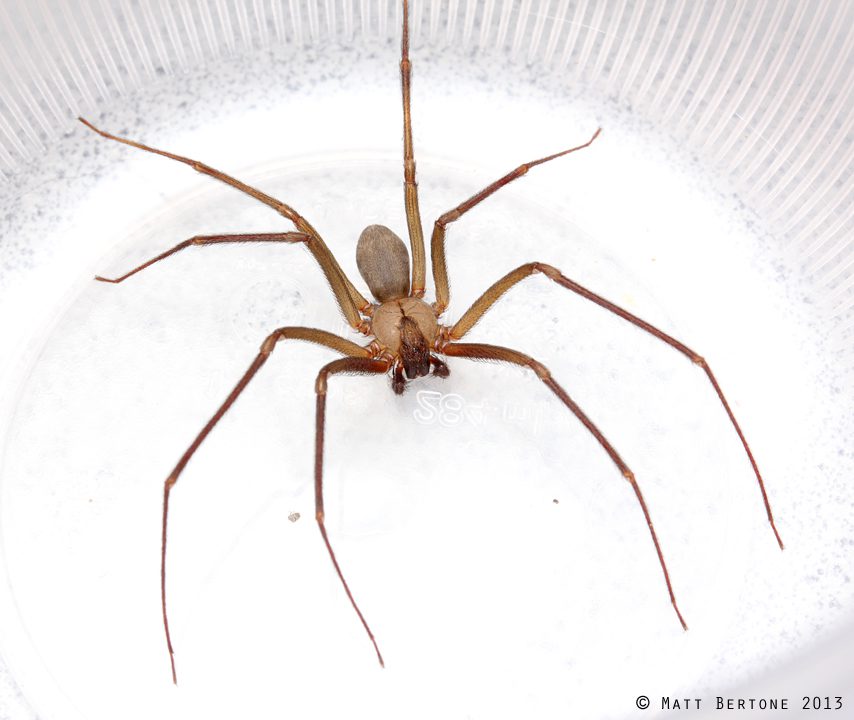
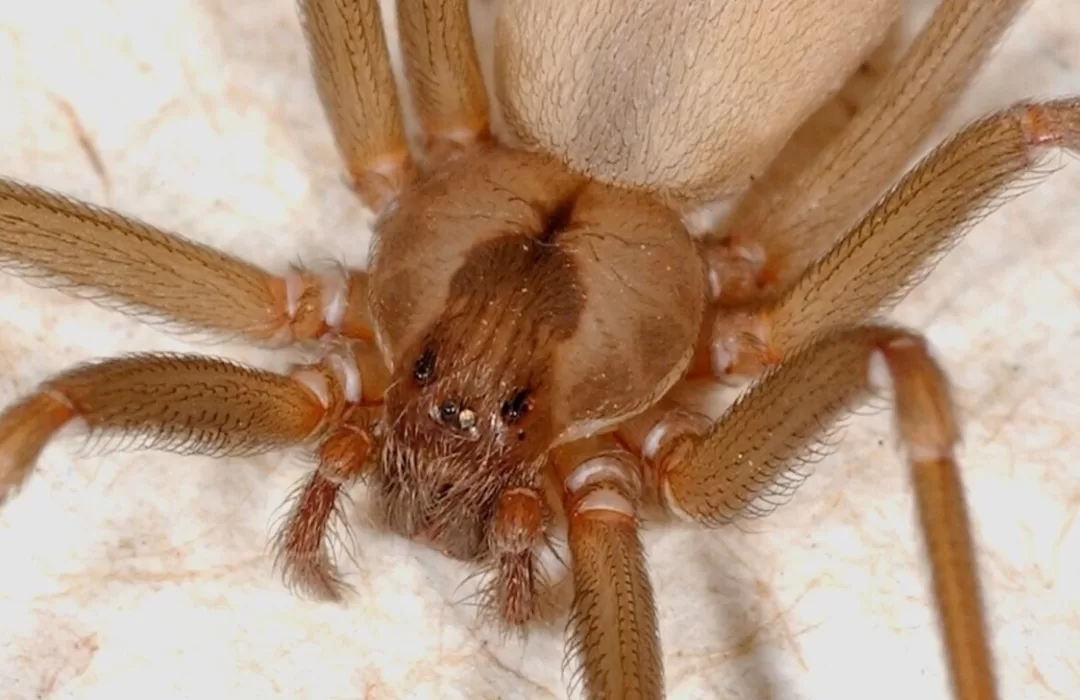
- The brown recluse spider is nicknamed the fiddleback or violin spider because of the distinctive dark violin-shaped marking on top of the cephlothoraxfront body section. Notice the neck of the violin points toward the rear.
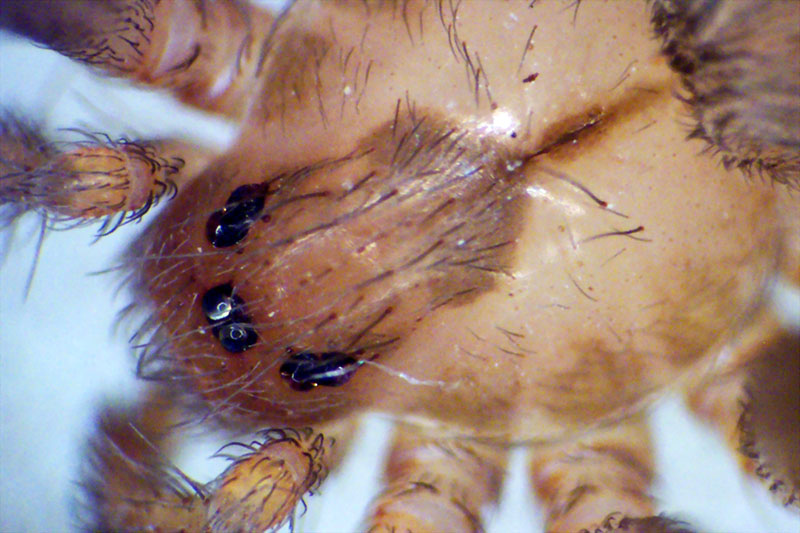
- The brown recluse is unusual in having six eyes instead of the usual eight.
- The spiders are tan to dark brown and nearly 1/4 (dime) to 1/2 inch (quarter) in body size. The immature spiderlings resemble adults in structure but have somewhat lighter coloration.
Habitat & Behavior
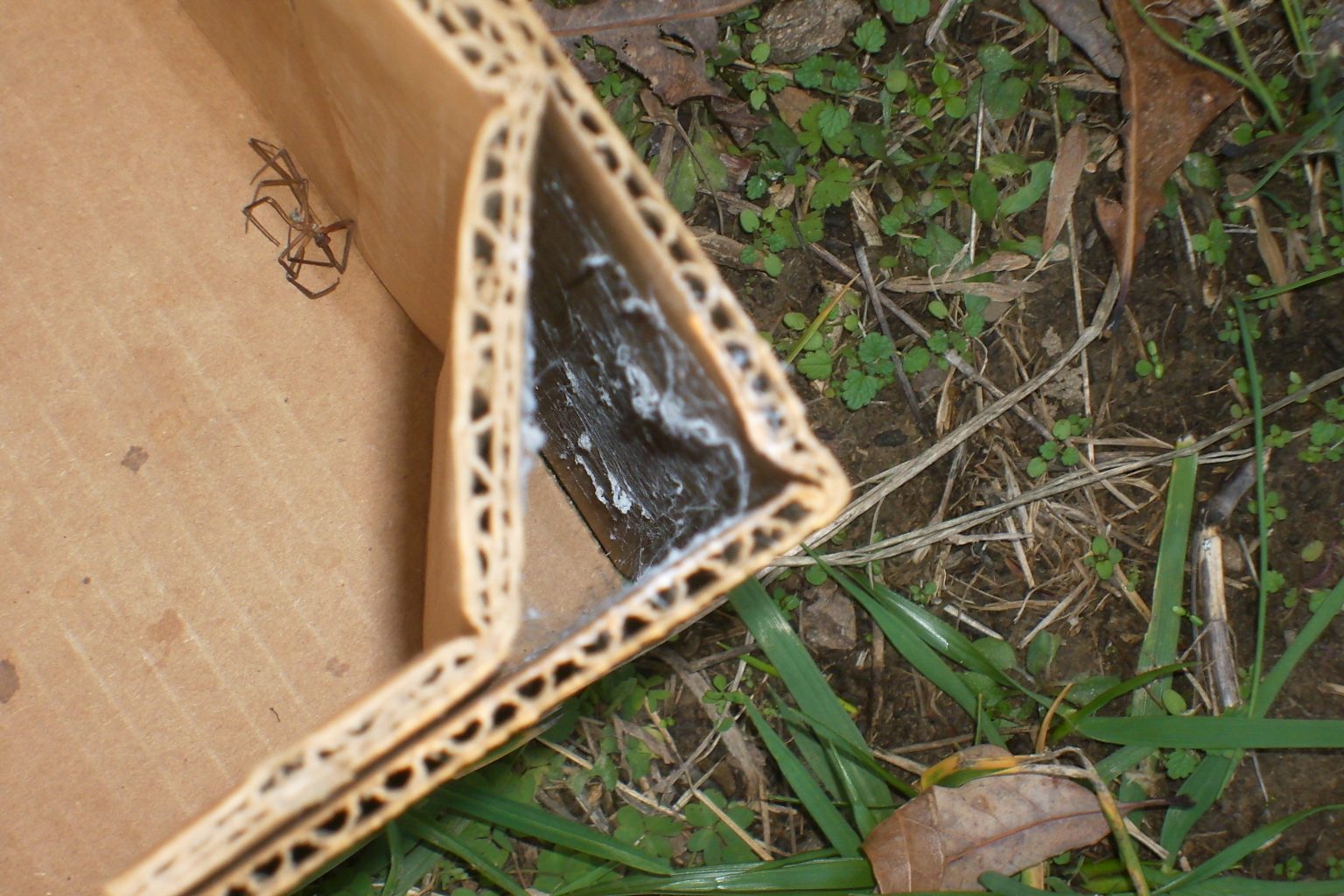
- Indoors, male brown recluse spiders live an average of 543 days, and females live 628 days, but 4-5 years is not uncommon. The female spins an irregular web in undisturbed areas, like the garage, attic and basement. The web is not used to catch prey, but rather as a retreat.
- The presence of shed skins in and around residences may be indicative of infestations and enable accurate identification.
- Recluse spiders avoid areas where there is human activity, and prefer closets, guest rooms, basements, and attics. They frequently inhabit shoe boxes, clothing and furniture. They are also found in cluttered storage areas and closets, under furniture and folded bedding, and in any other cluttered areas where it is dry and warm. They are also commonly found in storage boxes, shoes, coats, stored clothes, and drawers.
- Most people are bitten on the hands or feet when they are handling infested items.
- These spiders are most active at night and feed on silverfish, crickets, and other insects.
- In nature, the brown recluse spider lives outdoors in dry areas such as caves and rock and log piles.
- Around homes, they are most likely encountered under woodpiles, overhangs, tree bark, wall voids, leaf litter, brush, and crawl spaces.
- They get into homes through crevices or cracks in foundations or around doors, vents, or under eaves or soffits. People may even carry these spiders into residential buildings in boxes, furniture, and other items.
- They are active in temperatures between 45 degrees F and 110 degrees F. However, they may become inactive in winter as they respond to lower light cycles even in a heated home.

Peak Mating Season
- The peak mating and egg-laying season for fiddlebacks (brown recluses) in Oklahoma spans from May through August, with the highest activity often observed in July and August.
- During this time, warmer temperatures accelerate their metabolism causing them be more active and visible as they move out to hunt and reproduce more frequently.
-
From one to five egg sacs will be produced in a lifetime. After the eggs hatch, the young spiderlings undergo at least one molt (shedding of skin) within the egg sac.
-
Subsequently, second instar spiderlings will emerge from the egg sac and undergo six to seven molts during the next seven to 12 months before reaching the adult stage.
- Fiddleback Activity Timeline
Spring (March–May): Spiders emerge from winter hiding spots to begin mating.
Summer (June–August): Peak mating and egg-laying period. Females deposit 40–50 eggs in silken cases hidden in dark areas.
Fall (September–November): Spiders seek out winter shelters, often bringing them closer to human living spaces.
Prevention
- The most effective method of brown recluse spider control is to prevent them from entering the home in the first place.
- Homeowners should inspect the outside of your home for any small openings or holes, paying special attention to areas where utility pipes enter the home. Seal any such openings with a silicone caulk to prevent spiders and other insects from gaining access inside.
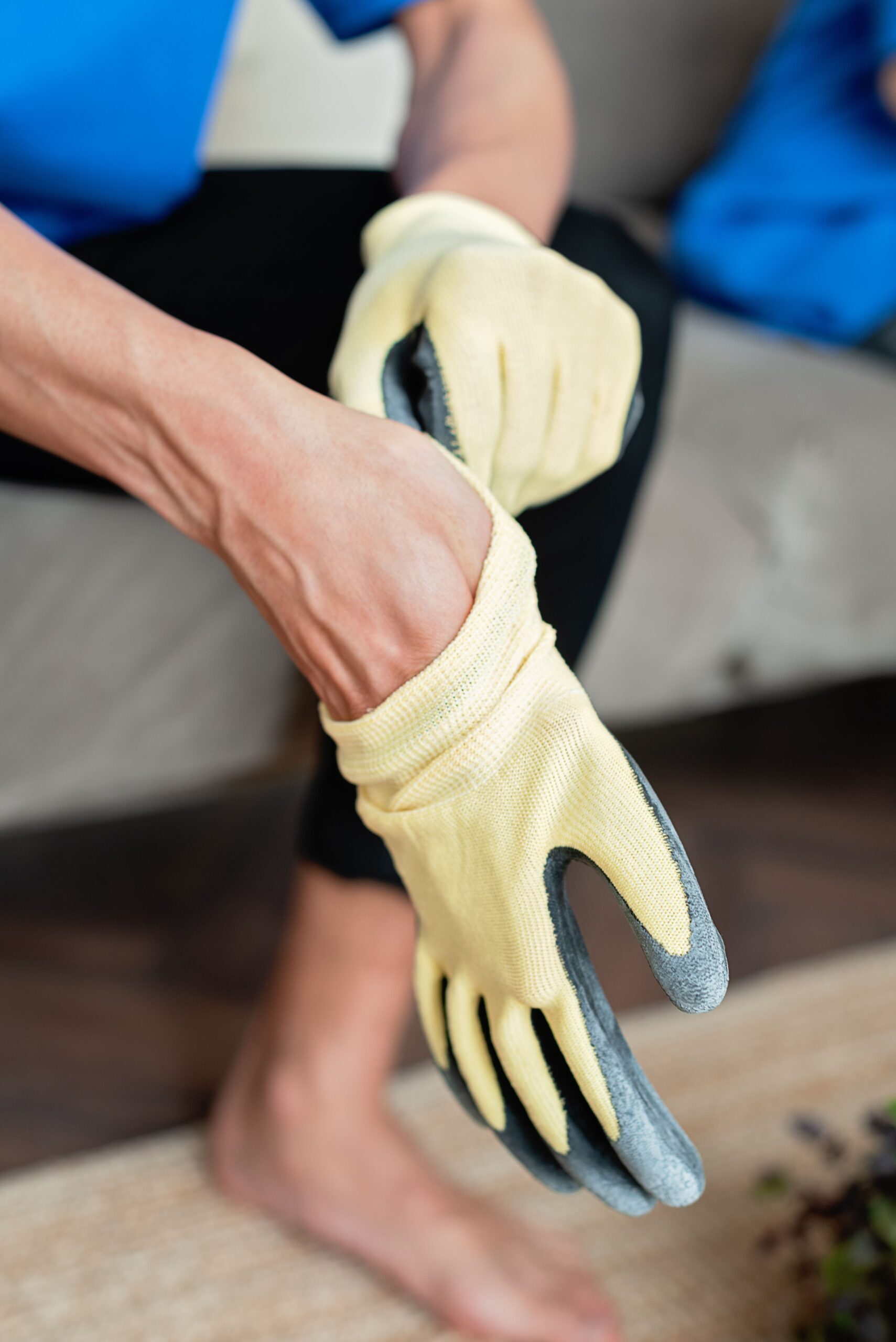
- Stack firewood at least twenty feet from your home and five inches up off of the ground to deter spiders from hiding out in the wood. It’s a good idea to wear gloves when moving the wood, and inspect it carefully before bringing indoors.
- Clothes and shoes should not be left on the floor, or they must be shaken out before wearing, especially if stored in the basement, garage, or other dark are. It’s good practice to store seldom-used items, such as boots, baseball mitts, skates, gardening clothes, and gloves, in tightly sealed plastic bags or boxes.
- Eliminate spider harborages by decluttering closets and storage rooms and areas.
- Eliminate spider food sources by cleaning off dead and alive insects.
Bite
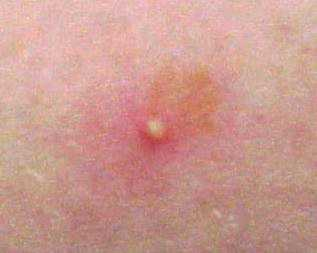
- The bite of the brown recluse spider is usually painless. However, localized burning sensation often develops within the first hour and during the next 6-12 hours, a small pimple or blister forms.
- The surrounding tissue begins to darken and take a raised appearance.
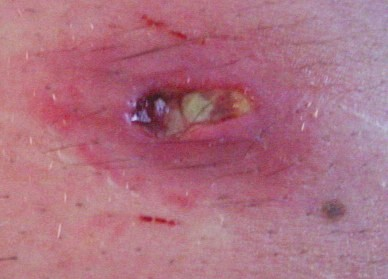
The venom of this spider can cause extensive tissue damage (necrotic reaction) and over the next 10-14 days, a sunken, open, ulcerated sore up to several centimeters in diameter. - It normally takes 6-8 weeks for a brown recluse spider bite to heal. A large sunken scar may persist that requires surgery to repair.
- Not every brown recluse bite results in ulcer formation.
- First aid for someone who has been bitten by a brown recluse spider includes cleaning the wound using mild soap and water, and applying an antibiotic ointment to prevent infection.
- The use of an ice pack is also recommended to prevent or reduce the swelling in the area where the bite occurred. Cooling the area helps to lessen tissue damage and reduce burning sensation, pain, and swelling.
- See your physician or emergency room as soon as you suspect a brown recluse spider bite. Capture the spider for later identification (crush the specimen, if necessary, but do so as gently as possible).
- Confirmation by an expert will help the physician decide on the appropriate course of treatment.
- In rare cases systemic complications such as liver or kidney damage result.
- While the brown recluse’s bite is dangerous, people rarely die from it.